Could Faulty Locks Affect Your Home Insurance?
Why Poor Locks Can Put Your Cover at Risk
Many homeowners don’t know that weak or broken locks can impact their home insurance. If your property access points aren’t secured, insurers might say you didn’t take reasonable precautions. This could leave you financially at risk.
If a break-in occurs and locks are defective or noncompliant, an insurer may reduce or deny a claim. From their perspective, they may treat a door that doesn’t lock properly as if someone had left it unsecured.
That’s why professional lock inspection and repair matter.
📞 Call now for expert advice: 07990 573857
Why Faulty Door Locks Are a Serious Issue
A faulty lock doesn’t always mean the key won’t turn.
Problems can include:
✓ Doors that don’t close fully ✓ Locks that don’t engage every time ✓ Handles that lift but don’t secure ✓ Locks damaged by wear, vandalism, or attempted break-ins
These issues develop over time, making them easy to overlook.
But, a faulty lock poses a real security risk. Most burglaries occur through a door, not a window. Even if the rest of your home feels secure, a compromised door lock can allow entry.
Do Insurance Companies Have Lock Requirements?
Yes—and they vary by insurer.
Each insurance provider sets its own security conditions in your policy terms. If your locks don’t meet those conditions, your insurer may not pay out after a break-in.
Most home insurance policies require:
✓ Locks that meet British Standard BS 3621 ✓ Properly functioning locking mechanisms ✓ Doors that fully close and secure
A British Standard Kitemark often shows which locks are compliant. But, this isn’t always clear without expert knowledge.
Your policy documents will confirm what’s required. If anything is unclear, contact your insurer directly to get clarification.
What Is a British Standard BS 3621 Lock?
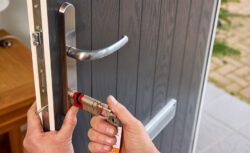
A BS 3621–compliant lock is designed to secure a door from both sides.
Once locked:
✓ A key is required to open the door from the outside
✓ A key is also required to open it from the inside
These locks are typically:
✓ Mortice deadlocks
✓ Deadlocking night latches
The purpose is simple. Even if a burglar gains access through a window, they can’t easily open the door to escape or remove large items without a key. This significantly improves security, which is why insurers favour this standard.
What about uPVC and Composite Doors?
Lock requirements for uPVC and composite doors can be confusing.
Many insurance policies only require a key-operated multipoint locking system, which offers less protection than most homeowners expect.
While this technically meets some policy requirements, we strongly recommend an upgrade.
✓ High-security anti-snap cylinders
✓ Improved resistance to forced entry
✓ Better real-world security
This is an area where insurance standards are likely to tighten in future. Upgrading now protects both your property and your insurance position.
Are Commercial Insurance Lock Requirements Different?
Yes.
Commercial insurance requirements vary depending on:
✓ The type of property
✓ How it’s used
✓ Whether the public has access
Business owners should always review policy documents carefully and ensure all minimum security standards are met.
If required locks or security measures aren’t in place, insurers may not be required to settle a claim after a break-in.
Get Peace of Mind With the Right Locks
A faulty or non-compliant lock isn’t worth the risk.
Stephen Fretwell Locksmith provides honest advice, professional lock repairs, and compliant lock upgrades to help keep your home secure — and your insurance protected.
📞 Call 07990 573857 to check your locks and secure your property properly.